
The hidden hardware helping AI’s heat problem If it feels like the semiconductor market is suddenly back in the headlines, that’s because it is. ASML, the world’s leading supplier of photolithography systems, recently reported that its shares have risen around 97 per cent over the past six months, reflecting renewed investment in chip production. Yet behind the headlines, … [Read more...]
From Materials to Manufacturing: A System-Level Approach to Thermal Management

Executive Summary Thermal management is becoming a defining factor in system performance across advanced electronics. Demand is accelerating in AI and high-performance computing, data center infrastructure, electric vehicles, semiconductors, industrial systems, and other high-reliability applications, where increasing power density and extended operating cycles place sustained … [Read more...]
Save Your Seat for Thermal Live Spring 2026, May 19

Registration is open for Thermal Live Spring 2026 Join Electronics Cooling on May 19 for a day of technical sessions and product demos focused on real-world thermal challenges. Register Now Thermal Live Spring 2026 brings together hundreds of engineers and technology leaders to share practical insight into the latest advances in cooling, materials, and system … [Read more...]
Alternative Battery Module Configuration for Fast Thermal Runaway Detection with a Reduced Number of Temperature Sensors
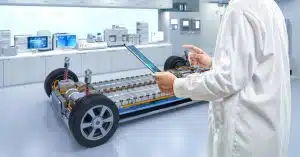
Abstract With increasingly strict regulations on lithium-ion battery (LIB) thermal runaway (TR) and safety, rapid detection has become essential to ensure passengers can evacuate safely in electric vehicles (EVs). Early TR detection requires temperature sensors to monitor battery behavior. Incorporating many sensors increases both cost and system complexity, so commercial … [Read more...]
Vapor Chambers vs. Thermal Pads: How to Choose the Right Thermal Solution for High-Performance Electronics
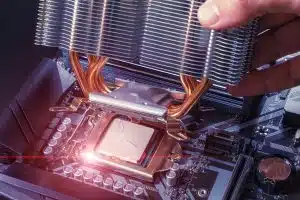
Thermal management has become one of the defining challenges in modern electronics design. Across data centers, AI and machine learning hardware, power electronics, and compact consumer devices, heat generation continues to rise as performance expectations increase. Higher power densities, faster processing speeds, and smaller form factors are placing sustained pressure on … [Read more...]
- 1
- 2
- 3
- …
- 52
- Next Page »