Save your spot for Thermal Live Fall 2026, live October 14–15. Electronics Cooling’s flagship virtual event returns for two days of technical presentations and product demonstrations focused on the thermal management challenges engineers are facing today. Register for Thermal Live Fall 2026 Thermal Live brings together engineers, designers, and industry experts to … [Read more...]
Use of Heat Transfer Coefficient and Pressure Drop Correlations for Liquid Cooling of Electronics

Introduction As single-component heat dissipations in electronics cooling are increasing, air cooling is not always up to the task and is being replaced by liquid cooling. Key differences between air cooling and liquid cooling are a much higher heat transfer coefficient, higher pressure drop and much lower fluid heating. This article investigates the use of correlations to … [Read more...]
Stream Data Center Cooling Days 2026

The Full Data Center Cooling Days 2026 Program is Available to Stream Over the past two weeks, engineers from across data center thermal management came together to share practical engineering presentations on liquid cooling, AI infrastructure, coolant management, thermal testing, and more. If you couldn't attend live or missed one of the sessions, you can watch the free … [Read more...]
Designing an Effective Thermal Path in High-Power Electronic Systems

ABSTRACT Power densities continue to increase in AI servers, high-performance computing (HPC) systems, electric vehicles, and semiconductor manufacturing equipment. As a result, thermal management has become a critical system-design requirement. Thermal solutions often fall short not because one material lacks performance, but because the complete … [Read more...]
Thermal Facts and Fairy Tales: Misusing Theta JA to Calculate Junction Temperature
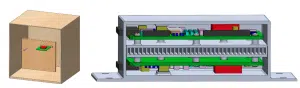
A misconception that experienced thermal engineers have likely encountered is related to the improper use of Theta JA (θJA) of an electronic component. Many electrical and reliability engineers are taught that the junction temperature of an electronic component in any electronics packaging configuration or application may be calculated by the equation below. Here, TJ represents … [Read more...]
- 1
- 2
- 3
- …
- 60
- Next Page »