
The SEMI-THERM 42 Symposium was held March 9-12, 2026 at the Double Tree Hotel in San Jose, CA. Program organization was led by General Chair Dr. Navid Kazem (Arieca), Program Chair Dr. Claire Wemp (Qnity), and Program Vice Chair Dr. Mohamed Abo-Ras (Nanotest). It featured technical short courses, technical sessions, invited presentations, vendor exhibits and workshops, a panel … [Read more...]
Save Your Seat for Thermal Live Spring 2026, May 19

Registration is open for Thermal Live Spring 2026 Join Electronics Cooling on May 19 for a day of technical sessions and product demos focused on real-world thermal challenges. Register Now Thermal Live Spring 2026 brings together hundreds of engineers and technology leaders to share practical insight into the latest advances in cooling, materials, and system … [Read more...]
Vapor Chambers vs. Thermal Pads: How to Choose the Right Thermal Solution for High-Performance Electronics
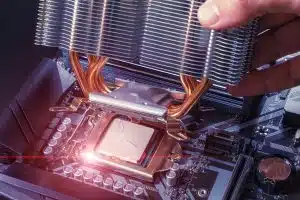
Thermal management has become one of the defining challenges in modern electronics design. Across data centers, AI and machine learning hardware, power electronics, and compact consumer devices, heat generation continues to rise as performance expectations increase. Higher power densities, faster processing speeds, and smaller form factors are placing sustained pressure on … [Read more...]
The Physics of Cooling in Confined Spaces: Advanced Driver Assistance Systems (ADAS) Automotive Electronics

Introduction The evolution of modern automotive engineering is defined by a single, escalating conflict: the demand for massive computing power versus the shrinking physical space available to house it. As vehicles transition from mechanical machines to "computers on wheels," the thermal management of Advanced Driver Assistance Systems (ADAS) has moved from a secondary … [Read more...]
Spacecraft Thermal Control in Extreme Environments: Surviving Lunar Night and Martian Dust
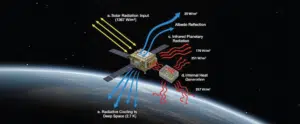
Abstract Extreme conditions in interplanetary environments, like lunar night at -173°C and Martian dust storms, require new thermal control systems that go beyond traditional electronics cooling approaches. Martian dust consists primarily of iron-oxide and silicate particles with diameters ranging from 1 to 3 μm. These particles are electrostatically adhesive, capable of … [Read more...]
- « Previous Page
- 1
- 2
- 3
- 4
- …
- 60
- Next Page »