Save your spot for Thermal Live Fall 2026, live October 14–15. Electronics Cooling’s flagship virtual event returns for two days of technical presentations and product demonstrations focused on the thermal management challenges engineers are facing today. Register for Thermal Live Fall 2026 Thermal Live brings together engineers, designers, and industry experts to … [Read more...]
Celebrating ITherm’s 25th Conference: A Summary of the 2026 Meeting

The IEEE Intersociety Conference on Thermal and Thermomechanical Phenomena in Electronic Systems (ITherm) was held at the JW Marriott Grande Lakes, Orlando, FL, May 26–29, 2026. This was the 25th ITherm, which was first held in 1988. The conference was historically held every other year until 2016 when it switched to an annual schedule, so ITherm 2026 marked the series’ 25th … [Read more...]
MEMS-Based Solid-State Airflow for Compact Thermal Management
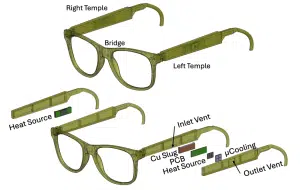
As consumer electronics continue their rapid evolution, each new generation is defined by a familiar yet intensifying mandate: deliver more performance in less space. Today’s devices — whether smartphones, wearables, or portable computing platforms — are expected to be thinner, lighter, and more power-efficient, while simultaneously supporting increasingly demanding workloads … [Read more...]
Designing an Effective Thermal Path in High-Power Electronic Systems

ABSTRACT Power densities continue to increase in AI servers, high-performance computing (HPC) systems, electric vehicles, and semiconductor manufacturing equipment. As a result, thermal management has become a critical system-design requirement. Thermal solutions often fall short not because one material lacks performance, but because the complete … [Read more...]
Thermal Facts and Fairy Tales: Misusing Theta JA to Calculate Junction Temperature
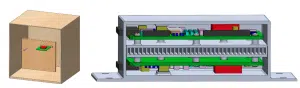
A misconception that experienced thermal engineers have likely encountered is related to the improper use of Theta JA (θJA) of an electronic component. Many electrical and reliability engineers are taught that the junction temperature of an electronic component in any electronics packaging configuration or application may be calculated by the equation below. Here, TJ represents … [Read more...]
- 1
- 2
- 3
- …
- 80
- Next Page »