
The IEEE Intersociety Conference on Thermal and Thermomechanical Phenomena in Electronic Systems (ITherm) was held at the JW Marriott Grande Lakes, Orlando, FL, May 26–29, 2026. This was the 25th ITherm, which was first held in 1988. The conference was historically held every other year until 2016 when it switched to an annual schedule, so ITherm 2026 marked the series’ 25th conference in its 38-year history. ITherm 2026 was sponsored by the IEEE Electronics Packaging Society (EPS) and was co-located with the 76th Electronic Components and Technology Conference (ECTC). ITherm has partnered with IEEE EPS peer conferences, including the International Workshop on Thermal Investigations of ICs and Systems (THERMINIC) in Europe, and the Electronics Packaging Technology Conference (EPTC 2026) in Asia.
The ITherm 2026 program consisted of 16 professional development courses and three full days of technical presentations in five tracks (including a new Data Centers track) with 41 sessions featuring more than 220 presentations. Additional technical events included three keynote addresses, five panels, five technology talks, a student poster and networking session, the ASME K-16/IEEE EPS Student Cold Plate Design Competition, and the return of the Art-in-Science Exhibition. New this year, attendees could also join a Tuesday evening tour of CoreSite Orlando and a Wednesday evening Student Mixer. To mark this milestone, a special luncheon retrospective celebrated the 25 ITherm conferences held since the series began in 1988.
Keynotes
On the first day of the conference, Dr. Sean Hart, Research Scientist – Quantum, IBM Research, gave a keynote address entitled “Frontiers of Quantum Computing Infrastructure,” surveying IBM Quantum’s roadmap to error-corrected quantum computers based on superconducting qubits and the hardware and infrastructure developments needed to support that scaling.
On the second day of the conference, Amy Griffin, Member of the Technical Staff, Micron Technology Inc., gave a keynote address entitled “Thermal Challenges in HBM Memory Package and AI Systems,” focusing on thermal limitations in advanced 2.5D and 3D-integrated memory systems and the architectural, materials, and system-level cooling solutions, from thermal vias and hybrid bonding to immersion and two-phase cooling, needed to address them.
On the final day of the conference, Prof. Madhavan Swaminathan, Department Head of Electrical Engineering and William E. Leonhard Endowed Chair, Pennsylvania State University, gave a keynote address entitled “The Future of 3D Heterogeneous Integration,” discussing the growing role of 3D heterogeneous integration in sustaining Moore’s Law and enabling the continued advancement of artificial intelligence.
Best Papers
Awards for the best and outstanding papers in each track were selected by the Paper Award Committee (21 distinguished judges from industry and academia) based on nominations from track chairs and reviewer scores, and were unveiled to attendees during the awards luncheon.
Professor Avram Bar-Cohen Best Papers
Component-Level Thermal Management
Pritish Parida, et al., “High-Fidelity Reduced-Physics Modeling of Two-Phase Flow Through Counter-Flow Expanding Channels Cold-Plate,” IBM Research.
System-Level Thermal Management
Roshith Mittakolu, et al. “Towards 1 MW Data Center Racks: System-Level Modeling of a Membrane-Assisted Two-Phase Cooling Architecture,” University of Maryland at College Park and University of Florida.
Mechanics and Reliability
Mahbub Alam Maruf, et al., “Mechanical Properties Evolution in SAC-LTS Hybrid Solders Subjected to Aging,” Auburn University.
Emerging Technologies and Fundamentals
Mingeun Choi, et al., “DeepONet-Enabled Fast and Scenario-Aware Spatial Temperature Prediction of a Vertical Power Delivery Module for Hyperscale Data Centers,” Georgia Institute of Technology and Claros, Inc.
Data Centers
Shrenik Jadhav and Zheng Liu, “Machine Learning Guided Cooling System Optimization for Data Center,” University of Michigan- Dearborn.
Best Paper – Runner Up
Component-Level Thermal Management
Lucas Oelkers, et al., “Applying Cumulative Structure Functions to Quantify Latent Thermal Buffering in Phase Change Composites,” Texas A&M University and DEVCOM Army Research Laboratory.
Insik Lee, et al., “Enhancing Two-phase Direct Liquid Jet- Impingement Cooling with Etched and Laser-Ablated Pin-Fins for 2.5D Semiconductor Packages,” Korea Advanced Institute of Science and Technology and Samsung Electronics.
Jaewon Park, et al., “Evaluation of Flow and Heat Transfer in Morphologically Blended Porous Unit Cells for Advanced Heat Exchangers with Functionally Graded Designs,” Purdue University.
System-Level Thermal Management
Hongchi Liu, et al., “Immersion and Shallow Pool Boiling of Novec 649 on Planar/Finned Copper Inverse Opal Structures,” Stanford University.
Mechanics and Reliability
Rohit Kumar Suthar, et al., “Thermo-Mechanical Characterization of Molded and Unmolded Substrates under Single-Phase Immersion Cooling,” University of Texas at Arlington and Texas Instruments.
Emerging Technologies and Fundamentals
Logan Pettit, et al.,“High-Speed Visualization of Flow Boiling Inversion and Hysteresis using Self-Organized Laser Functionalization (SOLF) of Stainless Steel Surfaces in Water,” University of Nebraska-Lincoln.
Lisa Tondelli, et al., “Transistor Level, Geometry-Driven Thermal Management in FinFET and FDSOI Technology,” Università di Modena e Reggio Emilia and imec.
Data Centers
Pranay P. Nagrani, et al., “Experimental investigation of R1234ze(E) condensation in liquid-cooled brazed plate heat exchangers for pumped two-phase data center cooling applications,” IBM Corporation and IBM Research.
Student Poster and Networking Session
The student poster and networking session provided an opportunity for students to interact with industry and academic leaders in their fields. This venue enabled students to connect with possible future employers and to receive feedback on their work. A record 81 student posters were subjected to two rounds of judging by more than 100 volunteer judges: an electronic review of each poster prior to the conference, followed by an on-site review of the printed poster and in-person presentation during the conference. Best E-Poster and Best On-site Poster awards were selected in each of four categories.
Component-Level Thermal Management
- Best E-Poster: Muhammad Awais, University of Minho (advisor: Prof. Vítor Monteiro), “Design and Experimental Development of a Laser-Ablated Wick Aluminum Vapor Chamber for SiC MOSFET Thermal Management in EV Fast-Charger Converters.”
- Best On-site Poster: Francis Vasquez, University of Connecticut (advisor: Prof. Georges Pavlidis), “Impact of Die Substrate Properties on Peak Temperature of AlGaN HEMTs via Packaged- Level Simulation.”
System-Level Thermal Management and Data Centers
- Best E-Poster: Roshith Mittakolu, University of Maryland at College Park (advisor: Prof. Saeed Moghaddam), “Towards 1 MW Data Center Racks: System-Level Modeling of a Membrane-Assisted Two-Phase Cooling Architecture.”
- Best On-site Poster: Daksh Adhikari, Georgia Institute of Technology (advisor: Prof. Satish Kumar), “Mitigation of Flow Boiling Instabilities via Active Flow Control.”
Mechanics and Reliability
- Best E-Poster: Sabina Bimali, Purdue University (advisor: Prof. Amy Marconnet), “Design of a Metrology Tool to Evaluate Degradation of Thermal Greases with Dynamic Warpage.”
- Best On-site Poster: Seiyefa Vincent, Auburn University (advisors: Prof. Jeffrey Suhling and Prof. Pradeep Lall), “Effect of Thermal Cycling on the Microstructure and Creep Response of Lead-free BGA Packages.”
Emerging Technologies and Fundamentals
- Best E-Poster: Mohamed Marey, University of Nebraska-Lincoln (advisor: Prof. Graham Kaufman), “Enhanced Pool Boiling Performance using Self-Organized Laser Functionalization (SOLF) of Copper in a Dielectric Fluid.”
- Best On-site Poster: Chance Brewer, University of Central Florida (advisor: Prof. Shawn Arthur Putnam), “Materials Selection and Processing for Tunable Superlyophilic-Superlyophobic Surfaces.”
Enjoying this article?
Subscribe to Electronics Cooling for practical, engineer-focused insight on today’s thermal management challenges—plus immediate access to new digital magazine issues.
Subscribe here →
Student Cold Plate Design Competition
The 2025–2026 ASME K-16/IEEE EPS Student Cold Plate Design Competition challenged student teams to design, analyze, and optimize an additively manufactured cold plate to cool a computer chip via forced convection liquid cooling. Three finalist teams, representing the University of Waterloo and University of Alberta; The Chinese University of Hong Kong and Donghua University; and the University of Nottingham Ningbo China, presented their designs on Wednesday. The winner was selected based on a weighted average of the measured figure of merit and evaluation by a panel of expert judges of each team’s presentation skills and use of additive manufacturing. Finalist designs were 3D-printed and tested at the Micro Nano Devices & Systems Lab at the Georgia Institute of Technology.
Winner
Team MicroAero: Yichen Lou, Zihan Zheng, Pengwei Huang, Aiwei Liu, and Ziyao Zhao; mentored by Dr. Shanshan Long, Dr. Yi Nie, Prof. Yong Shi, and Dr. Yinfeng He; University of Nottingham, Ningbo China. Their design achieved 12% better thermal resistance with 42% less pressure drop than the other finalist designs.
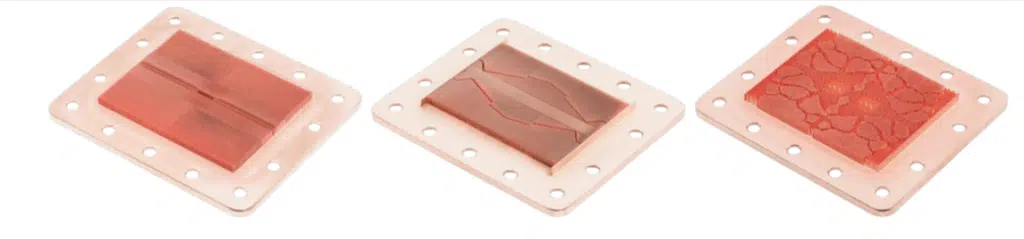
Art-in-Science Exhibition
Returning to ITherm this year, the Art-in-Science Exhibition showcased community-created artwork produced during authors’ scientific explorations and technical work, on display throughout the conference. Awardees and their images are shown in the following figures.


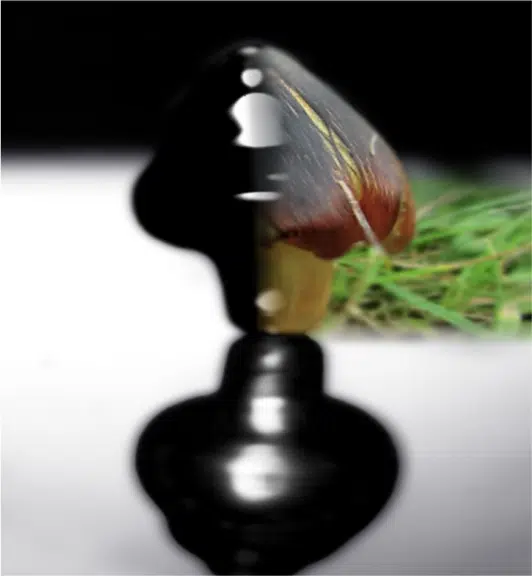
Richard Chu ITherm Award for Excellence
Prof. Samuel Graham, Jr. was awarded the 2026 Richard Chu ITherm Award for Excellence and delivered an award luncheon talk entitled “Materials, Process, and Metrology: Innovating Thermal Management Solutions at the Die Level.” Dr. Graham is the Dean of the Clark School of Engineering at the University of Maryland, a position he has held since 2021, and is also a Visiting Professor at Nagoya University in Japan. His research centers on wide bandgap semiconductor electronics (III-V, oxides) for optoelectronics, RF communications, power switches, and neuromorphic computing, with seminal contributions to the thermal design and metrology of GaN electronics, including the integration of GaN and AlGaN with diamond and AlN for high-power-density devices. He is a Fellow of ASME, AAAS, and ASTFE, and has received the Allan Kraus Thermal Management Medal from ASME. Dr. Graham was a Senior Member of Technical Staff at Sandia National Laboratories from 1999 to 2003 before joining the Woodruff School of Mechanical Engineering at the Georgia Institute of Technology, where he was appointed the Eugene C. Gwaltney, Jr. Professor and School Chair in 2018, prior to moving to the University of Maryland in 2021.
Proceedings
The ITherm 2026 Proceedings will be made available later this year through the IEEE Xplore Digital Library. Once posted, papers appearing in the Table of Contents will be available for access and download, along with listings of our Keynote Speakers, Tech Talks, Panels, Sponsors, and Exhibitors.
ITherm 2027
ITherm 2027 will be held at the Gaylord Rockies Resort and Convention Center, Denver, CO, USA, June 1st–4th, 2027. The abstract submission deadline is September 28, 2026. We hope to see you there!
Sponsors and Exhibitors
ITherm 2026 was made possible by those of you who attended and by the generous support of our sponsors and exhibitors. This year’s conference welcomed a record 527 registrants (a 14% increase over 2025), including more than 120 joint ITherm/ECTC registrants, along with 20 sponsors and 9 exhibitors, 5 of whom were first-time supporters.