Save your spot for Thermal Live Fall 2026, live October 14–15. Electronics Cooling’s flagship virtual event returns for two days of technical presentations and product demonstrations focused on the thermal management challenges engineers are facing today. Register for Thermal Live Fall 2026 Thermal Live brings together engineers, designers, and industry experts to … [Read more...]
On Polar Vortices, Space Chill Index and Bigger Cooling Fans

This past winter, many of us in the United States lived through a Polar Vortex. For anyone who is not familiar with the term, a Polar Vortex is a weather pattern made up of very cold temperatures, high winds, and frenzied TV weather forecasters who are beside themselves in enthusiastically explaining to the viewers how historically cold this particular weather system is. … [Read more...]
Tark Thermal Solutions Expands U.S. Manufacturing Operation with New Global Thermoelectric Technology Center
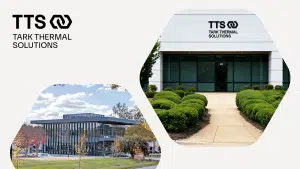
A $5.5 million investment more than doubles U.S. thermoelectric cooler production space, with over 5,300 sq. ft. dedicated to manufacturing and R&D to support growing demand across optoelectronics, sensor system and other high-growth markets. DURHAM, N.C., September 15, 2026 – Tark Thermal Solutions (TTS), a global provider of innovative active thermal management … [Read more...]
Celebrating ITherm’s 25th Conference: A Summary of the 2026 Meeting

The IEEE Intersociety Conference on Thermal and Thermomechanical Phenomena in Electronic Systems (ITherm) was held at the JW Marriott Grande Lakes, Orlando, FL, May 26–29, 2026. This was the 25th ITherm, which was first held in 1988. The conference was historically held every other year until 2016 when it switched to an annual schedule, so ITherm 2026 marked the series’ 25th … [Read more...]
Coolant Health as a Reliability Variable in Direct-to-Chip Data Center Cooling

As direct-to-chip liquid cooling moves from pilot projects to larger AI and high-performance computing deployments, maintaining coolant health is becoming an increasingly important part of the thermal reliability equation. Beyond selecting a fluid with the right thermal properties, engineering teams must consider coolant chemistry, system commissioning, sampling and testing, … [Read more...]
- 1
- 2
- 3
- …
- 228
- Next Page »