
Abstract Extreme conditions in interplanetary environments, like lunar night at -173°C and Martian dust storms, require new thermal control systems that go beyond traditional electronics cooling approaches. Martian dust consists primarily of iron-oxide and silicate particles with diameters ranging from 1 to 3 μm. These particles are electrostatically adhesive, capable of … [Read more...]
Rethinking Thermal Design Priorities in Electronics Packaging
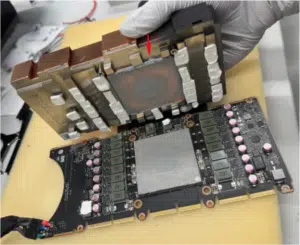
Steady state operating temperature is a critical design parameter for ensuring the reliable operation of modern electronics systems. However, in practice it is but one of many factors that impact overall system health and performance. Modern challenges, like the large transient power draw associated with artificial intelligence (AI) workloads create the potential for more … [Read more...]
THERMINIC 2025: A Landmark Workshop on Thermal Management and Electronics Reliability

The 31st international workshop on THERMal INvestigations of ICs and systems (THERMINIC) took place on 24–26 September 2025 in Naples, Italy, hosted at the Centro Congressi (Conference Center) of University Federico II. This year’s workshop not only broke attendance records but also showcased the seamless integration of cutting-edge research and industrial innovation in the … [Read more...]
Report About the THERMINIC 2024 Workshop

By Andras Poppe and Marta Rencz The 30th THERMINIC (Thermal Investigations of ICs and Systems) workshop was held on 25-27 September 2024 in Toulouse, France at the Mercure Toulouse Centre Compans. Jean-Pierre Fradin (Icam, France) and Patrick Tounsi (INSA Toulouse & LAAS – CNRS) as local organizers and co-program chairs of the 2024 THERMINIC did a great job: Over 110 … [Read more...]
Theta-JC Measurements: Steady-State Compared to Transient Methods
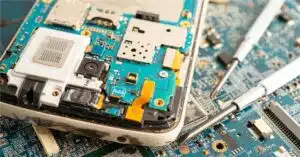
Thermal characterization plays a vital role in electronic package reliability testing, design, and verification of manufacturing processes. The reliability of electronic packages is controlled, in part, by ensuring the maximum junction temperature is not exceeded during operation. Systems such as cell phones, electric vehicles and computers, must operate with die temperatures … [Read more...]
- 1
- 2
- 3
- …
- 41
- Next Page »