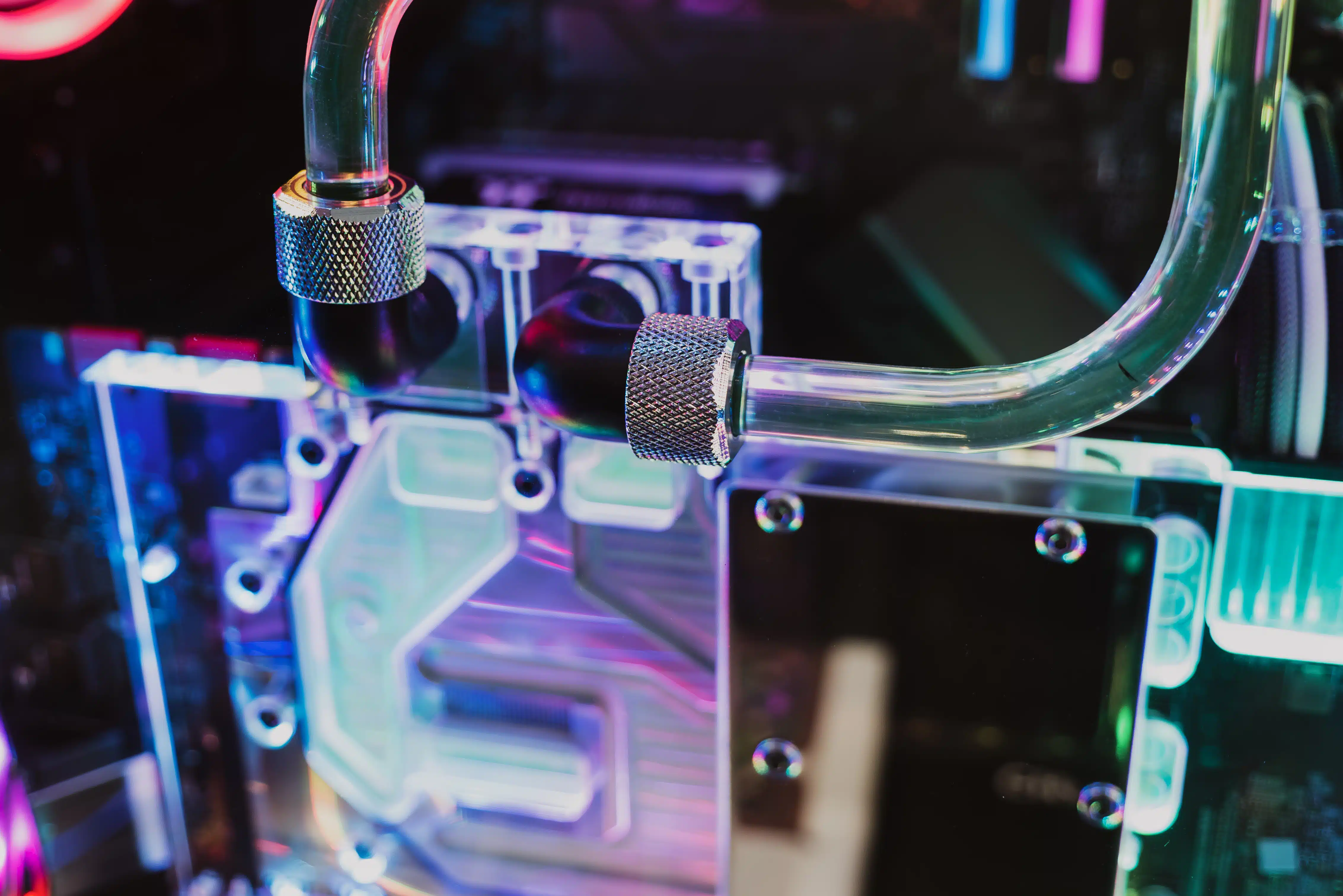
Chips are getting hotter, and liquid cooling is moving from niche to necessary. That transition changes what “good” looks like for fluid connections. Quick disconnect couplings have long lived in industrial settings, where design tolerances, qualification habits, and manufacturing controls matched those use cases. Data center liquid cooling—along with aerospace/defense and medical electronics—brings different expectations: tighter leak thresholds, cleaner assemblies, stricter controls on air ingress (as a system-level consideration), and shorter service windows. The goal of qualification is to build evidence that connections stay sealed under those realities—mechanically, thermally, and during the human moments when someone services the system.
Start with the real world, not the part number
Begin with a one-page mission profile: typical and peak pressure, how fast temperatures change, the relevant vibration/shock environment, service intervals, and the coolant chemistry. A two-phase rack loop isn’t the same as a glycol avionics loop or a sterile clinical loop. That snapshot becomes your north star for what to test and what “pass” means.
Two rules help: make tests representative before you make them severe—then add margin where failure carries high consequence (patient-adjacent, airborne, high-density compute). And if service happens hot, fast, in gloves, or in tight spaces, include that reality in the plan. Finally, agree on failure definitions up front: any detectable loss, a creeping trend, reconnect trouble—decide before you pressurize anything.
What changes when you move from air to liquid
Liquid cooling raises the bar in a few consistent ways, and industry suppliers—like Parker Hannifin—are adapting qualifications and building practices to meet those expectations. Compared with traditional industrial use, data-center, aerospace/defense, and medical environments push for tighter leak thresholds, cleaner assemblies, and faster, more predictable service windows.
- Leak thresholds and air ingress: Air ingress is a factor to consider, and quick disconnects can be a source, but most liquid-cooling systems incorporate effective air-management strategies that mitigate it.
- Cleanliness and handling: Lower particulate limits and cleaner assemblies reduce fouling and improve valve/seal life. Practices commonly include clean-area assembly, use of appropriate clean-room PPE for operators, protective caps, and controlled packaging and shipping.
- Qualification specificity: General industrial proofs give way to application-specific profiles—pressure cycling to represent life and thermal ramps tailored to racks, blades, and service procedures. Custom test rigs and fixtures often mirror blind-mate access, hose weight, and side loads so results predict field behavior.
- Verification methods: Beyond standard screens, programs frequently add helium leak testing for path finding, tighter in-process checks, and traceability for assemblies that must stay clean from build to install.
These aren’t brand features; they’re emerging table stakes for leak-tight, serviceable liquid-cooled electronics.
Make “leak” a number
If you say something is leak-free, show the number and how you measured it. Most teams use a quick screen to catch big leaks (like a pressure-decay test) and a more sensitive method for tiny losses (for example, using trace gas to sniff out leak paths, weighing a setup over time to see slow loss, or using a very low-flow meter). There isn’t one “best” test—each finds different issues.
When you share or understand results, include the method, how sensitive it is, and how repeatable it is. Don’t only look at the size of the leak; watch the trend. Instead of prescribing specific thresholds, ensure the approach characterizes both level and stability over relevant life. Air ingress can be noted as part of system considerations, recognizing that most deployments already mitigate entrained air.
Enjoying this article?
Subscribe to Electronics Cooling for practical, engineer-focused insight on today’s thermal management challenges—plus immediate access to new digital magazine issues.
Subscribe here →
The core tests—and what they actually tell you
Pressure cycling: simulate life in the loop
Static pressure proofs don’t show how connections behave over time. The priority is pressure cycling that represents expected life, not impulse severity. Use a pressure-cycling pattern that looks like your system’s operating reality, run the test with your actual coolant at realistic temperatures, and pick a cycle count aligned to service life.
Passing language should remain general: the goal is to understand leak-rate behavior over life and confirm connect/disconnect remains consistent for the intended use. Where variation appears, teams can evaluate fit-for-purpose design and process factors without implying specific remedial actions.
Temperature swings: what thermal cycling shows
Heating and cooling exposes two things: parts expand and contract at different rates, and seals “set” over time. A good thermal plan sets the high and low temperatures, how fast you move between them, how long you soak at each end, and how many cycles represent real life. Keep the assembly pressurized during the test; unpressurized results can be misleading. Add a few “cold starts” where you pressurize right after a cold soak—just like a real restart after maintenance.
Don’t wait for the final day to learn something. Do quick leak checks and function checks (like connect/disconnect force) during the test to catch trends early. Minor changes or slow weeping are signals to characterize and keep within the intended service envelope, rather than triggers for specific actions.
Don’t skip the human moments
Most losses happen when people touch the system, not during steady operation. Include a realistic service simulation: cycles of connecting and disconnecting with gloves on, limited visibility, time pressure, and at temperature if that’s how it’s done in the field. Measure how much fluid you lose per event and (as applicable) note any air entrained on restart to align with system-level mitigation practices. Those inputs translate into cleanup planning, coolant top-offs, and bring-up expectations.
Also track how the forces to connect and disconnect change over life. If they drift high, people reach for tools; if they drift low, connections may not fully seat. Small design tweaks—lead-ins, guards, chamfers, clear labels—often cut errors and speed up service.
Build a right-sized sequence
You don’t need every test on the planet—you need the right ones in a sensible order. A common, defensible flow:
- Quick incoming screen to catch outliers.
- Pressure cycling to represent expected life.
- Thermal cycling under pressure to expose heat-related effects.
- Service simulation with measured loss and, where relevant, observation of air management.
- A short set of abuse brackets (side load, misalignment, over-torque) to bound foreseeable misuse.
- Final proof/burst and post-test measurements.
Make each step answer a different question so you’re not paying twice for the same insight. Use smaller samples for early design screens; scale up when you’re setting fleet-level thresholds or maintenance intervals.
Turn results into decisions
Treat results as inputs to planning, not just stamps. Understand leak rates and the method and its resolution so people can compare apples to apples. Focus on classifying behavior (e.g., stable vs. changing over time) rather than prescribing numeric thresholds here. Convert “cycles until we first saw a change” into a maintenance interval with a sensible safety buffer. Then close the loop: as field data arrives, adjust test severity and scope so the lab keeps matching real life.
The bottom line
For liquid-cooled, mission-critical electronics, leak-tight performance depends on more than a single test or part spec. It’s the combination of a mission-mapped test plan, measurement methods with stated sensitivity, acceptance limits tied to operational risk, and build/handling practices that preserve cleanliness and integrity from assembly through shipping and install. Do that, and “leak-free” becomes a number the whole team can plan around.