Executive Summary
Thermal management is becoming a defining factor in system performance across advanced electronics. Demand is accelerating in AI and high-performance computing, data center infrastructure, electric vehicles, semiconductors, industrial systems, and other high-reliability applications, where increasing power density and extended operating cycles place sustained stress on thermal solutions. In these environments, managing heat is tied directly to system stability, efficiency, and lifespan.
As requirements evolve, competition is shifting beyond material properties alone. Performance is increasingly shaped by how well materials are integrated into manufacturing processes, validated across operating conditions, and delivered through stable supply chains. Engineers are placing greater weight on consistency, traceability, and the ability to scale from prototype to production without introducing variability.
This shift is taking place alongside broader changes in global supply networks. Tariffs, regional policy changes, and the need to reduce dependence on single-market sourcing are driving companies to build more flexible and distributed operating models. The ability to respond quickly to design changes and maintain continuity across regions has become a practical advantage.
T-Global addresses these dynamics through an integrated structure that connects Taiwan-based research and manufacturing with Vietnam-based logistics, distribution, and customer engagement, supported by a global service network. This model links material development with supply execution, allowing customers to move more efficiently from design through production while maintaining consistency across regions.
The result is a more coordinated approach to thermal management, where materials, manufacturing, and supply chain capabilities work together to support performance, reliability, and delivery in demanding applications.
Market Background: Why Thermal Management Demand Is Increasing
High Power Density as the New Normal
The steady increase in chip performance has come with a corresponding rise in heat generation. Modern processors, GPUs, and power electronics operate at higher power levels and for longer durations, often within increasingly compact designs. This combination has made heat flux density a defining constraint in system design.
Where thermal challenges were once localized, they are now systemic. Managing heat effectively requires coordination across materials, interfaces, and mechanical structures.
Thermal Management as a System-Level Challenge
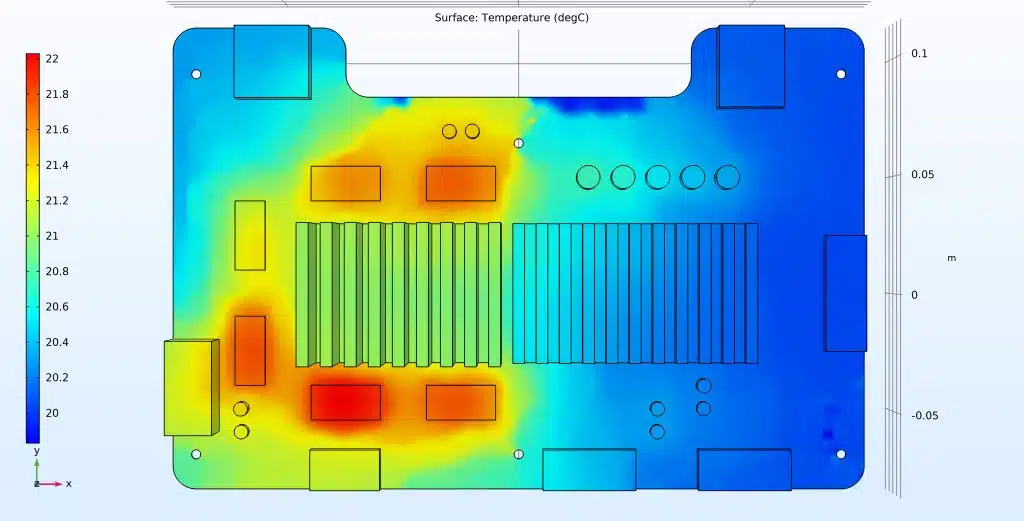
Thermal performance is influenced by more than conductivity alone. Interface quality, surface conformity, and long-term stability all play critical roles. Even small variations in interface thickness or material consistency can lead to measurable differences in performance.
Manufacturing processes and supply chain consistency now play a direct role in thermal outcomes. A well-designed material can underperform if production variability or logistics delays disrupt implementation.
From Price Competition to Reliability and Integration
As applications become more demanding, decision-making criteria are shifting. Engineers are placing greater emphasis on validation data, long-term reliability, and compatibility with manufacturing processes. Cost remains important, but it is increasingly balanced against risk.
This is particularly evident in applications such as AI infrastructure, EV power systems, and industrial electronics, where failures carry significant operational and financial consequences.
Enjoying this article?
Subscribe to Electronics Cooling for practical, engineer-focused insight on today’s thermal management challenges—plus immediate access to new digital magazine issues.
Subscribe here →
Vapor Chambers: Managing High Heat Flux
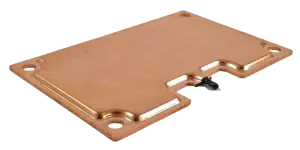
Vapor chambers play a central role in applications where heat must be distributed quickly and evenly. By spreading thermal energy across a larger surface, they reduce hotspots and improve temperature uniformity.
Their effectiveness depends on manufacturing precision. Structural consistency, sealing integrity, and process control all influence long-term performance.
Thermal Interface Materials: A Critical Link
Thermal interface materials (TIMs) form the connection between components, making them a key factor in overall system performance. Their effectiveness depends on surface conformity and the ability to maintain contact over time.
TIMs function as part of a broader thermal system rather than isolated materials. Selecting the right TIM involves balancing thermal resistance, mechanical properties, and compatibility with assembly processes.
Metal-Based TIMs: Indium and Liquid Metal
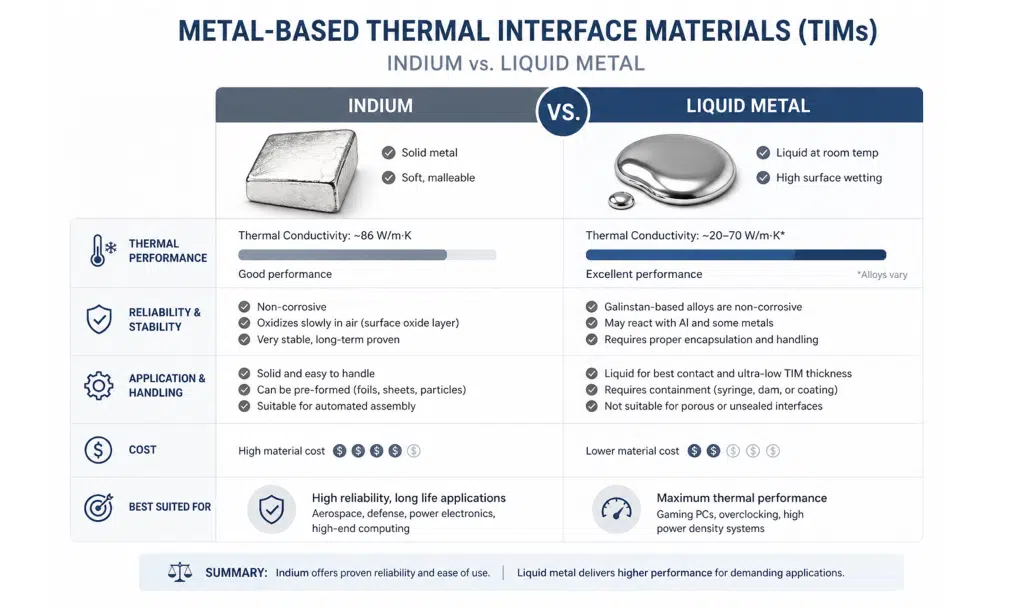
As heat flux increases, traditional materials may not meet performance requirements. Metal-based TIMs provide alternatives for applications where higher thermal performance or long-term stability is required.
Indium foil offers a combination of high thermal conductivity and mechanical compliance, allowing it to conform to surface irregularities while maintaining consistent contact over time. This makes it well suited for applications where reliability, reworkability, and long service life are priorities, particularly in environments with mechanical or thermal cycling.
Liquid metal provides very low interfacial thermal resistance and supports high heat flux in compact designs. Its performance advantages make it effective in applications where maximizing thermal transfer is the primary objective, though it requires careful consideration of material compatibility, containment, and application methods.
In practice, selection depends on application priorities: indium foil is typically chosen where long-term reliability and stability are critical, while liquid metal is used where peak thermal performance and minimal interface resistance are the primary drivers.
Application Analysis
Thermal requirements vary significantly by application, with each environment placing different demands on materials, interfaces, and system design.
AI, GPU, and ASIC Systems
Rising compute density drives extreme heat flux in tightly packed architectures. Thermal solutions must manage localized hotspots while maintaining consistency across large-scale deployments, where even small inefficiencies can compound across thousands of units.
Servers and Data Centers
Performance is closely tied to uptime and energy efficiency. Thermal materials must support stable operation over extended periods, often under continuous load, while integrating cleanly with automated manufacturing and serviceability requirements.
Electric Vehicles
Electronics and battery systems operate under wide temperature ranges and repeated thermal cycling, requiring materials that maintain performance over time without introducing mechanical stress or degradation.
Telecom and 5G Infrastructure
This vertical must balance between thermal performance with environmental exposure. Outdoor deployments, variable loads, and long service intervals place a premium on reliability and resistance to environmental factors.
Aerospace and Specialized Environments
Responding to constraints like vibration, pressure variation, and extreme temperatures, thermal materials must perform consistently under mechanical stress and in some cases within vacuum or sealed systems.
Across these applications, the challenge is not only selecting the right material, but also ensuring it performs reliably within the broader system and over the full lifecycle of the product.

Integrated Value: From Materials to Manufacturing
Thermal management is most effective when treated as a complete system. Materials, manufacturing processes, and supply chain capabilities must work together to deliver consistent performance from design through production. Focusing on individual components in isolation often leads to variability, integration challenges, and delays later in the development cycle.
This is where the role of the supplier is evolving. Rather than providing discrete materials, companies are expected to support system-level integration — helping align material selection with process requirements, application conditions, and long-term reliability targets. This shift reflects a broader move from component sourcing toward solution-oriented collaboration.
The T-Global model is built around this approach. By connecting material development in Taiwan with manufacturing execution and regional support in Vietnam, the company provides continuity across the product lifecycle. This structure enables a transition from supplying individual thermal materials to supporting integrated thermal solutions, where performance, manufacturability, and delivery are addressed together.
The result is a more efficient path from concept to production, with fewer integration gaps and greater confidence in long-term performance.
Supply Chain Shift: Why Vietnam Matters
Global Supply Chain Restructuring
Recent years have seen a steady move away from reliance on single-region manufacturing. Companies are diversifying production and distribution to reduce exposure to geopolitical and economic disruptions.
This shift has increased the importance of regional flexibility and faster response times.
The Strategic Role of Vietnam
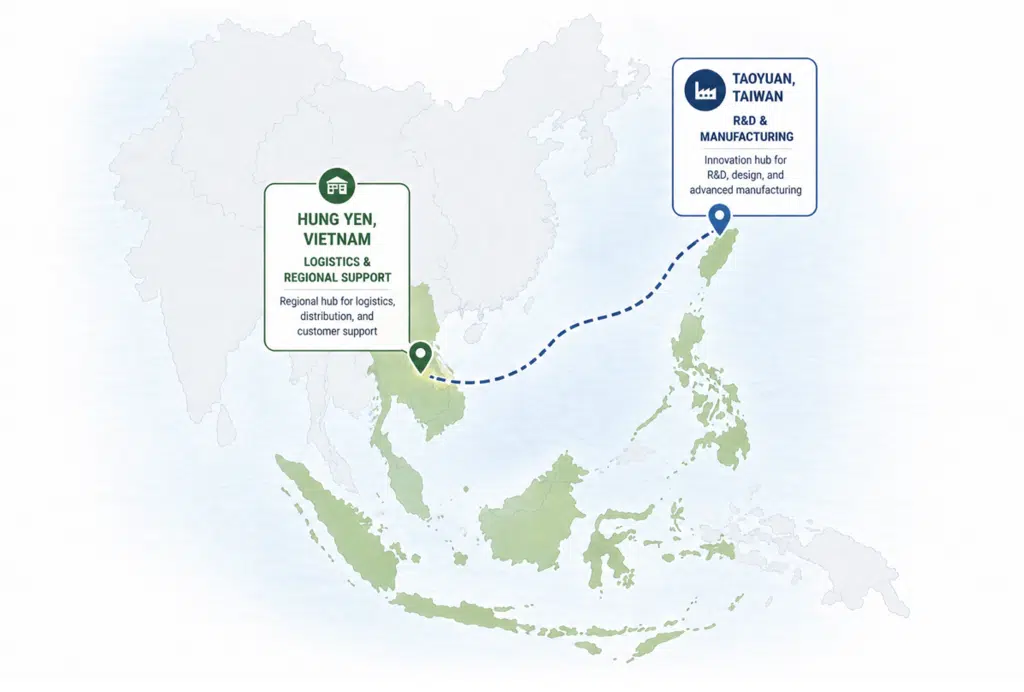
Vietnam has emerged as a key node within the electronics ecosystem. Its proximity to ports of China and Association of Southeast Asian Nations (ASEAN) enables coordination with existing supply chains while supporting expansion into new regional markets.
For T-Global, this location strengthens both operational efficiency and customer proximity.
Relevance to Thermal Management
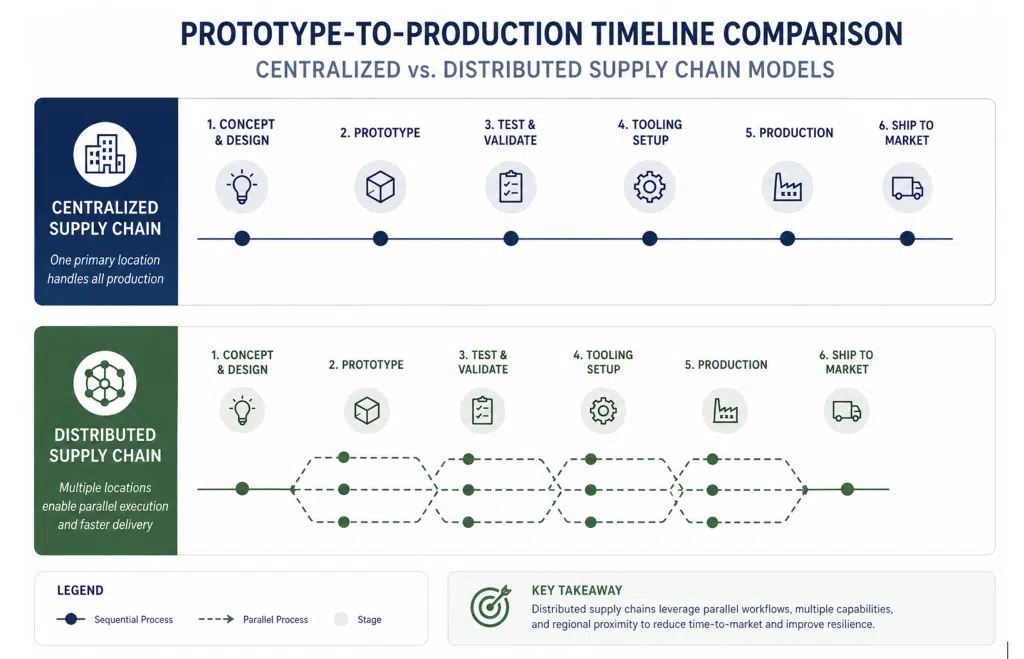
Thermal solutions often require iteration—prototyping, testing, and refinement before full-scale production. When supply chains are fragmented, this process can slow significantly.
By establishing a presence in Vietnam, T-Global shortens the path from development to deployment. This enables faster transitions from prototype to production and improves responsiveness to evolving requirements.
The T-Global Vietnam Strategy
Core Positioning
The new model connects Taiwan-based R&D and manufacturing with Vietnam-based warehousing, distribution, and technical support. This creates a continuous link between engineering development and market delivery.
Functional Role of the Vietnam Site
The Vietnam facility serves as a logistics hub, regional inventory center, and technical engagement platform. It supports customer interaction through product display and application discussions, strengthening collaboration between engineering teams and solution providers. The facility also focuses on Online to Offline (O2O) lead generation and conversion as part of marketing efforts to expand business to non-US markets.
Customer Value
For customers, the model translates into shorter lead times and more predictable delivery. It also allows for faster project onboarding and iteration. In environments where timing and reliability are critical, these advantages directly affect outcomes.
Manufacturing and Supply Support
Taiwan–Vietnam Operational Model
Taiwan remains the center for research, design, and manufacturing. Vietnam extends this capability by supporting logistics, regional coordination, and customer-facing activities. Together, the two operate as a unified system rather than separate functions.
Product Portfolio
T-Global supports a range of thermal technologies, including vapor chambers, heat pipes, thermal interface materials, and integrated thermal modules. These solutions are designed to work together within complete systems.
End-to-End Support
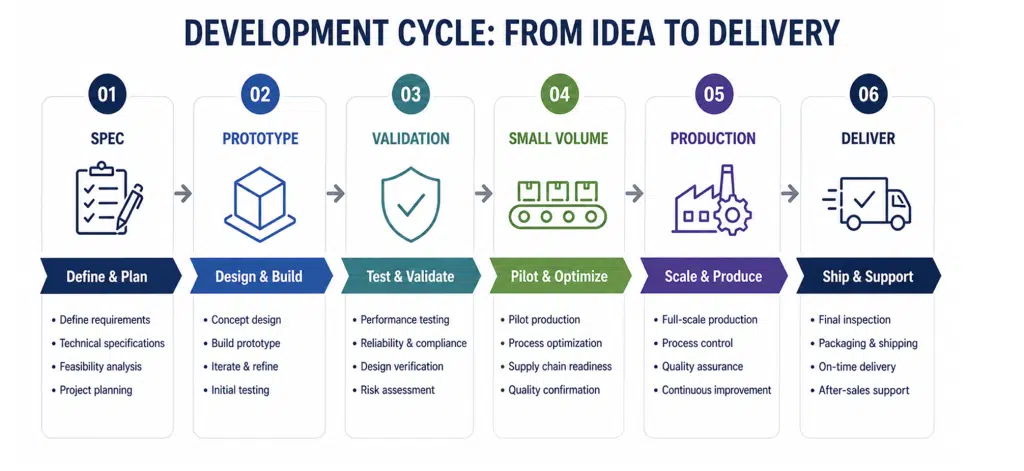
Support spans the entire development cycle, from initial specification through prototyping, validation, and volume production. This continuity reduces friction and improves consistency across stages.
Quality and Consistency
Consistency is maintained through standardized processes, traceability, and cross-site coordination. This approach supports long-term reliability, particularly in high-performance environments.
New Systems for New Demands
Thermal management is evolving from a materials-focused discipline to a system-level challenge. Performance depends not only on conductivity, but on how well materials are integrated into manufacturing and supply processes.
Reliability, supply stability, and consistency are becoming critical differentiators. Companies that align these elements are better positioned to meet the demands of modern electronics.
The T-Global Taiwan–Vietnam model reflects this shift, providing a structure that connects materials, manufacturing, and supply into a unified approach. The result is faster delivery, improved consistency, and a more reliable path from concept to production.