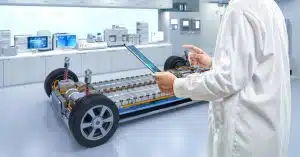
Abstract With increasingly strict regulations on lithium-ion battery (LIB) thermal runaway (TR) and safety, rapid detection has become essential to ensure passengers can evacuate safely in electric vehicles (EVs). Early TR detection requires temperature sensors to monitor battery behavior. Incorporating many sensors increases both cost and system complexity, so commercial … [Read more...]
Vapor Chambers vs. Thermal Pads: How to Choose the Right Thermal Solution for High-Performance Electronics

Thermal management has become one of the defining challenges in modern electronics design. Across data centers, AI and machine learning hardware, power electronics, and compact consumer devices, heat generation continues to rise as performance expectations increase. Higher power densities, faster processing speeds, and smaller form factors are placing sustained pressure on … [Read more...]
Monte-Carlo as a Tool for Robust Thermal Design

Introduction Parametric design plots are commonly used in early thermal architecture studies to understand sensitivity across the design space, often resulting in the selection of a single-point solution that achieves a key design objective. For example, the size of a passively cooled consumer electronics device may be selected such that it achieves the required thermal … [Read more...]
High-Performance Copper Tungsten Cold Plates for Direct-to-Chip Single-Phase Liquid Cooling
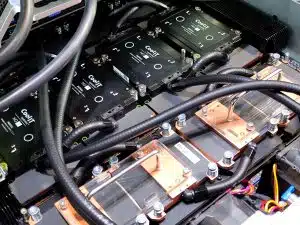
In April 2025, Google announced its 1 MW 42U rack [1], marking a turning point in data center thermal management where traditional air cooling can no longer support the extreme power densities of modern hardware. As chip thermal design power (TDP) continues to grow, data centers must replace air-cooled heat sinks with liquid-cooled cold plates [2]. Cold plates transfer heat … [Read more...]
The Physics of Cooling in Confined Spaces: Advanced Driver Assistance Systems (ADAS) Automotive Electronics

Introduction The evolution of modern automotive engineering is defined by a single, escalating conflict: the demand for massive computing power versus the shrinking physical space available to house it. As vehicles transition from mechanical machines to "computers on wheels," the thermal management of Advanced Driver Assistance Systems (ADAS) has moved from a secondary … [Read more...]
- 1
- 2
- 3
- …
- 185
- Next Page »