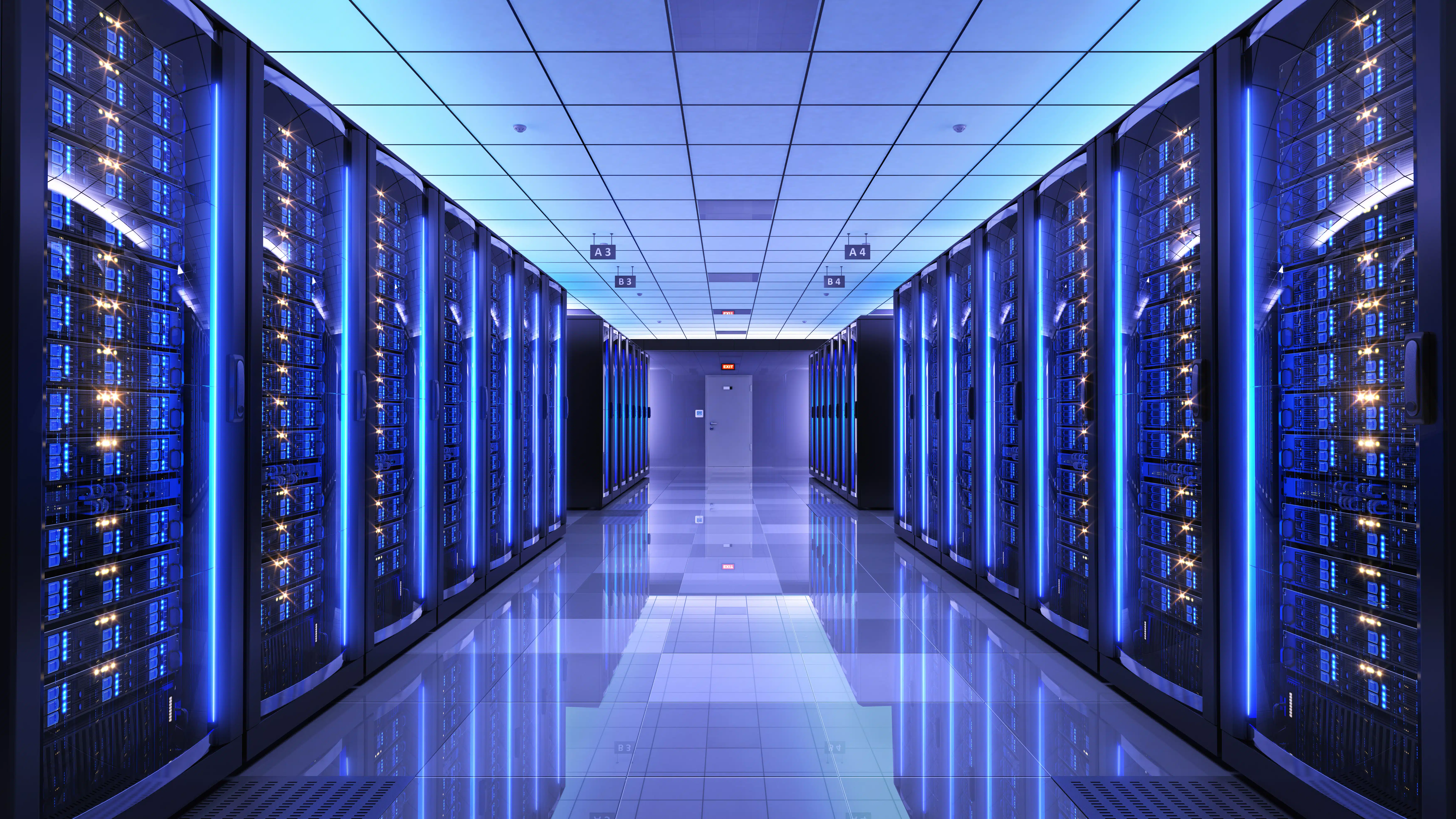
The rapid rise of AI accelerators and high-performance computing has pushed rack power densities to unprecedented levels. While direct-to-chip liquid cooling successfully manages heat at the processor, the power delivery path itself has emerged as the next critical thermal bottleneck.
Recently, Electronics Cooling sat down with Vic Geevarghese, Director of Operations of Busbar/Power at Molex, to discuss how extending liquid cooling into the power-distribution layer can help system architects overcome these thermal constraints. Here is an excerpt from that conversation.
Electronics Cooling Magazine (ECM): We know AI is pushing rack power densities off the charts, but practically speaking, what does the breaking point of air-cooled busbars actually look like in the lab or the field? Is it a specific kW-per-rack threshold, or is it simply that we’ve run out of physical space to push enough air?
Vic Geevarghese (VG): Air cooling simply doesn’t provide enough heat transfer at higher power levels. As more power runs through the conductors, heat generation increases.
Realistically, it’s a combination of factors. If you’re not accounting for the proper power distribution method and an efficient cooling strategy, you’re going to see thermal failure.
These are all considerations during data center design. You’re trying to fit more racks into the available space. If your power distribution footprint continues to grow, you’ll eventually run out of physical space depending on how many racks you want to install. Liquid cooling is the next step because it provides more efficient cooling, allows for greater rack density, and reduces reliance on traditional air-cooling methods.
Another factor is airflow blockage. You can increase current capacity by using more copper, but larger busbars can obstruct airflow. That airflow restriction becomes a limitation as power requirements continue to increase.
ECM: So, as we think about traditional air-cooling architecture in a data center environment, what happens when localized hotspots occur?
VG: A hotspot creates additional resistance inside the busbar, leading to a larger voltage drop and decreased overall efficiency. Air-cooled systems generally waste more energy because higher temperatures build up resistance in the copper, resulting in thermal losses. Liquid-cooled busbars conserve energy by minimizing these temperature-related losses.
ECM: There’s a distinct advantage there. And with a liquid-cooled system, where coolant is running directly through the power delivery path, we are removing the need for large heat sinks and thick copper. What does the engineer do with that reclaimed space in the rack?
VG: I wouldn’t say we are creating extra space. A few years ago, a rack might have drawn only 20 kW of power. Today, those same racks can draw 250 kW or even 500 kW—roughly 20 times more power than before.
The physical rack space hasn’t changed. Engineers must integrate liquid-cooled power delivery within the same footprint while delivering dramatically more power. Any space savings are often consumed by increasingly powerful servers and processors, which require much higher current levels than previous generations.
If power requirements continue to grow without more efficient cooling, the power delivery system must grow in size, reducing the number of racks you can fit into a facility. Without adopting new cooling methods, you eventually run into the limits of physics where air-cooled power distribution simply cannot support modern AI workloads.
ECM: That makes me think—where is that limit? In other words, at what point does liquid-cooled power distribution stop being a premium option and become a mandatory, non-negotiable baseline just to turn the machines on?
VG: Around 3,000 amps, which corresponds to roughly 150 to 160 kW, you start pushing the limits of an air-cooled busbar, particularly if you want to maintain a stable 30°C temperature rise.
Many of the largest air-cooled busbar deployments we’ve worked on are around that level. Once you reach those power densities, it’s time to start evaluating the tradeoffs and considering liquid-cooled alternatives.
Looking ahead, data center operators will need to think at the system level. You can’t simply take a traditional data center filled with 20 kW racks and replace them with 700 kW racks. That requires substantial infrastructure changes.
The future will involve a combination of upgrading existing architectures and designing new high-density data centers that can handle the extreme power demands driven by AI workloads and next-generation processors.
ECM: Suppose I decide to go with the multi-channel Molex liquid-cooled busbar. What’s the biggest advantage of this product? What sets Molex apart?
VG: While other liquid-cooled busbars exist, conventional single-channel designs deliver lower performance. The Molex multi-channel approach increases the heat-transfer surface area within the same tube size, improving heat removal while minimizing turbulence. In simulation testing, this design demonstrated a 20% improvement over a comparable single-channel design.
We also achieve this performance in half the space. Conventional designs often require roughly 50mm² of space for their cooling channels, while the Molex design achieves comparable performance using approximately 25mm².
_____
The shift to liquid-cooled busbars highlights a broader engineering philosophy at Molex. By rethinking the internal geometry of the coolant pathway, engineers can extract more heat without expanding the physical footprint of the hardware. As data centers transition toward megawatt-class architectures, integrating liquid cooling directly into the power backbone is becoming a practical necessity for continued system reliability. For a deeper dive into the engineering behind this shift, read the Molex blog, “Unifying Power and Thermal Management: The Shift to Liquid-Cooled Busbars.”